
Checklist: What to Look for When Buying a Rebounder?
Disclaimer: This website exists thanks to you, the readers. When you buy through links on my site, I may earn an affiliate commission.
A rebounder is easy to get wrong. Buy the cheap one and you get a squeaky mat, wobbly legs, and a bounce that is hard on your knees. Buy well and you get a quiet, sturdy trampoline you will still be using in five years.
There are several things you need to consider when choosing the best rebounder that meets your needs.
So what to look for when buying a rebounder?
The short answer
If you want the quick version, look for these five things first:
- A steel frame with snap-in legs, not screw-in.
- A mat that is at least 40 inches across so you have room to move.
- The right spring type for your body: bungee for gentle, joint-friendly bouncing, steel springs for firmer, higher jumps.
- Six legs rather than four for better stability.
- A frame warranty of five years or more, which is a good sign the brand trusts its own build.
Everything below explains why, and where each one matters most.
What to look for when buying a rebounder?
Here is the long answer. There are a few things to look at. Once you get those, it's easy.
1. Size and the space you have
Start with your room, not the rebounder.
You want at least 10 square feet of clear floor around where it sits. Tight on space? A small, foldable model is the answer, and you can slide it under the bed when you are done.
For the mat itself, aim for 40 inches or more. A bigger mat gives you room for more than bouncing. As Bellicon puts it:
"On the larger sizes, you can do ab workouts, pilates, yoga, you name it. Since the mat is a lot softer than solid ground, workouts like these will be easier on your back."
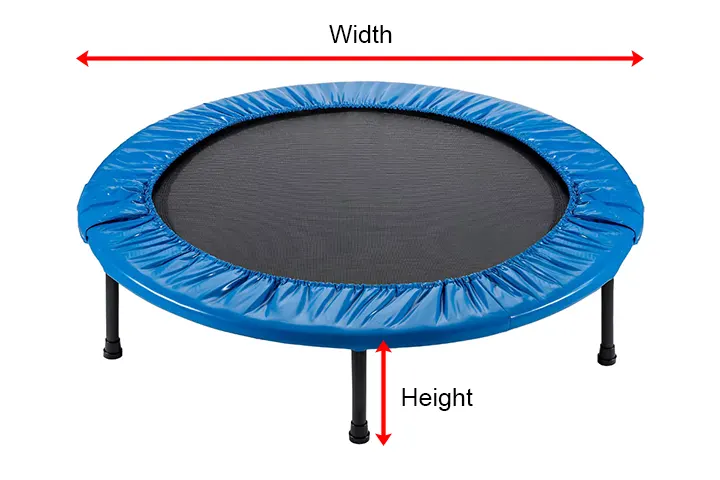
The trade-off is storage. Bigger rebounders last longer and feel steadier, but they are harder to tuck away. If you are stuck on sizing, our guide on what size rebounder you need walks through it.
The right size comes down to three things: your space, your body, and your workout. Start with space — you'll want at least 10 square feet of clear floor. Tight on room? A small, foldable rebounder is the answer.
2. Springs or bungees
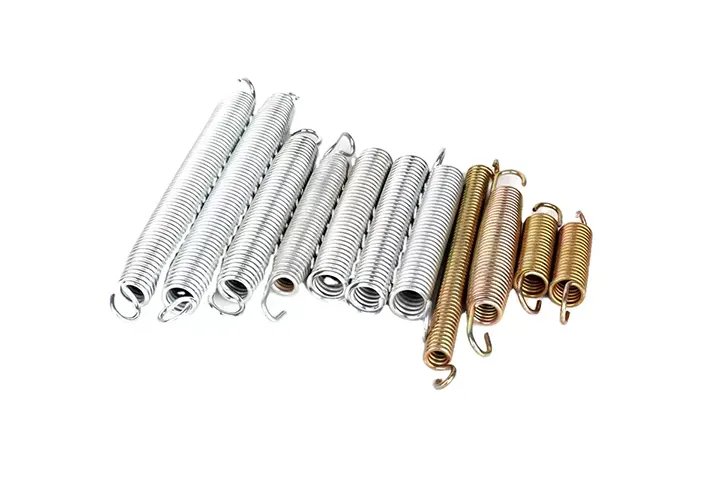
This is the single biggest decision, because it sets how the rebounder feels underfoot.
Bungee cords give a soft, quiet, joint-friendly bounce. They are the usual pick for lymphatic drainage and longer, gentler sessions. The downside is they lose elasticity over time and eventually need replacing.
Tapered steel springs give a firmer, higher bounce and tend to last longer. They handle heavier body weights and bigger movements well. The catch is more noise, and they can feel harsh if you have knee or joint trouble.
One thing to avoid: cheap tube springs. They are less reliable and limit the range of exercises you can do. For a deeper comparison, see bungee vs. spring rebounders.
3. Frame and legs
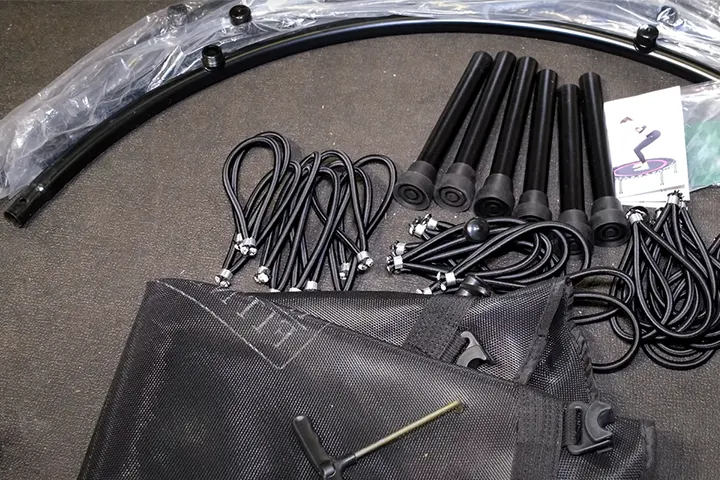
The frame is what holds everything together and keeps you safe, so this is not the place to save money.
Go for high-quality steel. It gives better support and shrugs off heavy daily use.
Legs are more about fit than right or wrong. Folding legs make the rebounder easy to store and carry. Threaded screw-in legs, the kind with rubber caps, are common on heavy-duty steel frames and let you take the legs off to store it flat or fold it.
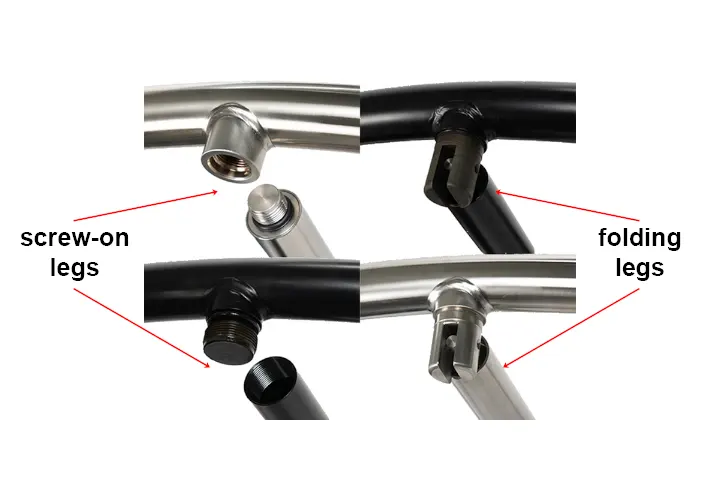
What matters is that the legs lock in firmly and sit on non-slip rubber feet, so the base does not creep as you bounce.
Bellicon and JumpSport both back their frames with a lifetime warranty, for example. The parts that actually wear out are the mat and the bungees or springs, usually covered for one to four years, so read those terms closely.
4. Mat and safety pads
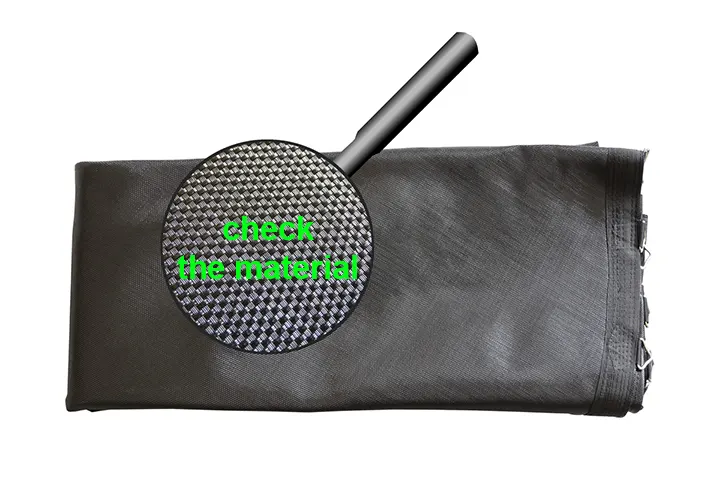
The mat is the part you are in direct contact with, so check two things: the material and how it attaches to the springs.
The best mats use woven polyethylene and nylon strands. Thick, tightly woven fabric feels strong but still soft. Avoid plain plastic or canvas mats, since they stretch over time and kill the support.
Then there are the safety pads. These cover the springs and the gaps between them, so one bad landing does not put your foot on a spring or hook. A well-fitted, secure pad is one of the simplest safety checks you can make.
5. Handlebar
The handlebar supports you while bouncing so you can feel more stable and safer. It’s good to get that handlebar if you’re new to bouncing workouts.
Still, some specialists advise not to get used to it too much because it can ruin your posture. The best thing to do is to slowly move away from using the handlebar.
6. Portability, storage, and spare parts
If the rebounder lives in a shared room, portability matters. Some fold only the legs. Others fold the whole frame, and a few come with a carry case. Foldable is worth it if you will be moving it around or storing it out of sight.
One thing buyers forget: replaceable parts. Bungees stretch, mats wear, and regular use takes its toll. Before you buy, check that spare parts are actually sold for that model. Being able to swap a worn part is far cheaper than buying a whole new rebounder.
Should you choose a foldable rebounder?
If you're not planning to travel with your equipment often, and you keep it in one place, then it's best to get a rebounder with screw-in or welded legs.
7. Price and warranty
Cheap rebounders cut corners on the exact parts that keep you safe. As a rough rule, anything under $150 is usually built to maintain a low price rather than to last.
You don't need the most expensive model, though. Match the spend to your goals. A beginner can start small and cheap. If you want daily, intense workouts, pay up for a thicker mat, better springs, and a longer warranty.
On warranty, the frame usually carries the longest cover, and the best brands offer lifetime frame protection. The mat and cords wear faster, so check their terms and the after-sale service too, especially if you are spending real money.
Spring vs. Bungee Rebounder
Still torn between the two main types? Here is the honest breakdown.
Spring rebounders
Spring rebounders are durable and cheaper. But they can get noisy.
Pros
Cons
Bungee rebounders
On the other hand of the bungee vs. spring rebounder debate are rebounders with bungee-based mats. They are generally gentler and much quieter.
Pros
Cons
There are exceptions worth knowing. The Cellerciser uses springs but was built for lymphatic drainage, so it stays soft on the joints.
And if you want a quiet bungee model between the budget and premium tiers, the Acon Fit 44" is one I have tested and would happily recommend. It is sturdy, near-silent, and backed by a 10-year frame warranty.
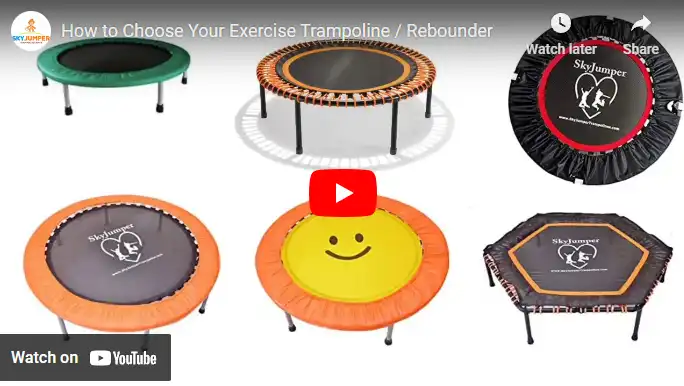
Videos To Help You Choose The Right Rebounder

My top three picks
If you just want a list to pick from, here are the three I recommend most. You can check my list of the best rebounders on the market for more info and a full comparison.
Product | My Rating | Verdict | Price |
|---|---|---|---|
This rebounder innovative spring technology provides a unique and adaptable rebounding experience that enhances full-body strength. | |||
This compact mini trampoline stands out as a quiet, stable, and space-efficient option, delivering excellent value for its cost. | |||
You can't go wrong with a bellicon. This is the best bungee bounce you'll get and it can easily last you a decade or more. |
FAQ
Should you wear shoes on a rebounder?
You can, and good sports shoes add comfort and support. But barefoot or in trampoline socks works your feet and lower legs harder. The exception: if you have supination or pronation issues, keep your shoes on for safety.
What type of rebounder is best?
It depends on your goals. Bungee models suit people with knee or joint concerns who want an easier workout. Spring models suit people chasing an intense, calorie-burning session.
How often should you rebound?
There is no fixed number. It comes down to your goals and fitness level. If you are new to it, start with short, slower sessions and build up.
Who should skip a rebounder?
If you have a recent injury or an ongoing problem with your knees, ankles, or lower legs, check with your doctor first. Bouncing loads those exact joints.
Conclusion
The health benefits of rebounding are undeniable. Try it and you will see!
And don't overthink the decision which rebounder to buy.
A good rebounder is quiet, sturdy, and kind to your joints, and it will outlast three cheap ones. Nail the frame, the springs, and the size for your space, and the rest falls into place. Then all that is left is the fun part.
