
How Long Does a Trampoline Last? (Average Lifespan by Part)
Disclaimer: This website exists thanks to you, the readers. When you buy through links on my site, I may earn an affiliate commission.
You are about to spend real money on an outdoor trampoline, and there is one question you keep coming back to. Will this trampoline actually last?
Fair question. A trampoline lives outside, takes a beating, and sits in the sun all day.
The trick is, "the trampoline" is really six parts, and they wear out at different speeds. This guide breaks down how long each part lasts, what kills them fastest, how to spot when it's time to replace, and how to squeeze more years out of the one you buy.
How long does a trampoline last?
Here is the short answer: Most outdoor trampolines last 3 to 8 years. A well-built premium model, can last 10 years or more with good care. A cheap trampoline might only give you 1 to 2 years before something important fails.
Here is the thing, though. The number depends far more on build quality, weather, and how you treat it than on the badge on the box.
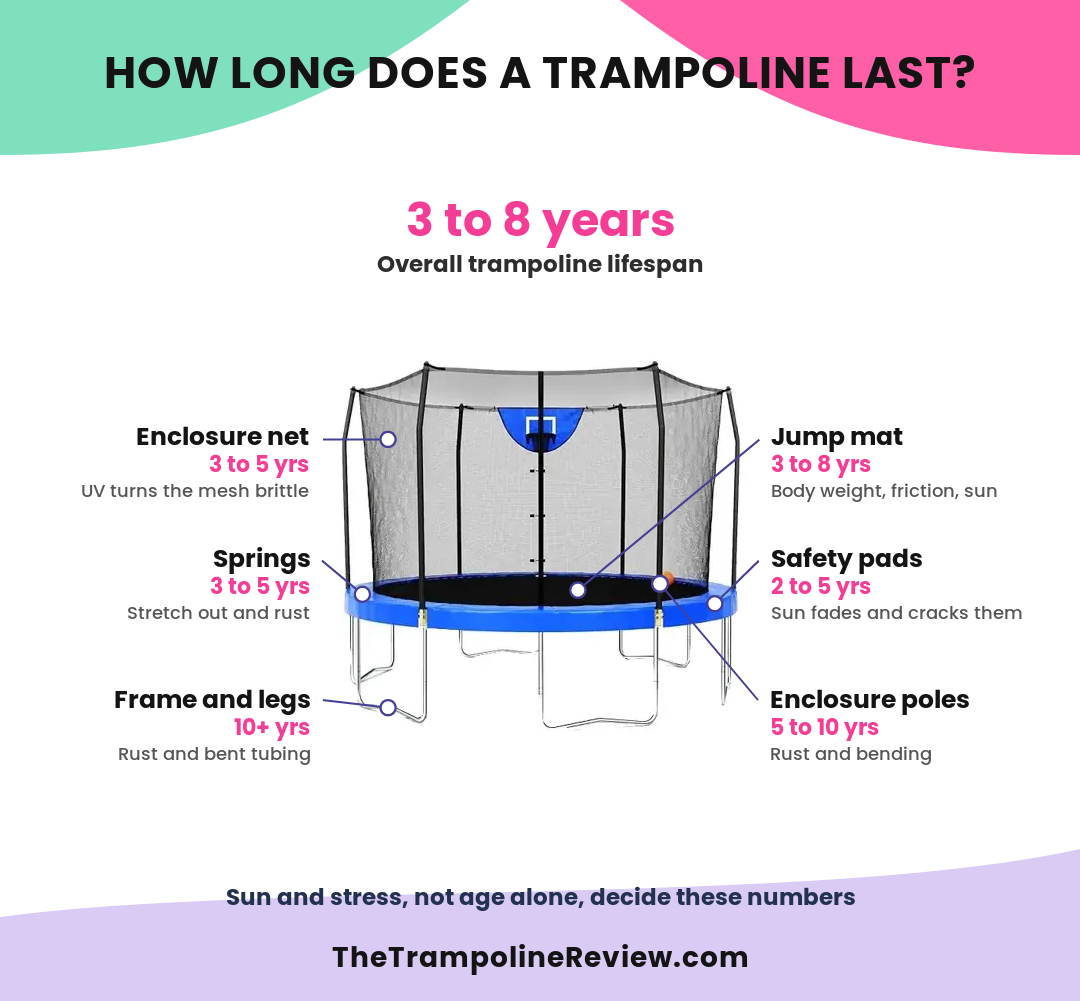
It also varies by part. The steel frame usually outlives everything else. The mat, springs, and net wear out first. So a trampoline rarely dies all at once. Usually one part gives up while the rest is still fine.
That's good news, because a single worn part is often a cheap fix, not a reason to start over.
Average lifespan by trampoline type
Not every trampoline ages the same way. Price tier, where it lives, and how much you use it all influence how long it will last.
Budget trampolines use thinner steel and untreated mat fabric, so they wear out faster. Premium models use galvanized steel and UV-treated mats that hold up for years.
One useful yardstick: some premium makers now test their trampolines to millions of jumps before release, which tells you how seriously the build is engineered.
Trampoline type | Typical lifespan | Example |
|---|---|---|
Budget round trampoline | 1 to 3 years | |
Mid-range round trampoline | 3 to 8 years | |
Premium round trampoline | 10 years or more | |
Springfree trampoline (the specific brand) | 8 to 10 years or more | |
In-ground | 5 to 10 years or more |
Pick the right tier for how you'll actually use it, then read on to see which parts you'll be replacing along the way.
How long each part of a trampoline lasts
A trampoline is only as good as its weakest part. So here is how long each one typically holds up and what wears it out.
Trampoline type | Typical lifespan | What wears it out | Replace? |
|---|---|---|---|
Frame | 10 years or more (quality); 5 to 7 years (budget) | Rust, bent tubing, metal fatigue | Rarely worth it |
Jumping mat | 3 to 8 years | Body weight, friction, UV | Yes |
Springs | 3 to 5 years | Stretching, rust, lost tension | Yes |
Enclosure net | 3 to 5 years | UV, wind, fraying | Yes |
Poles | 5 to 10 years | Rust, bending | Yes |
Safety pads | 2 to 5 years | Sun fading, cracking, moisture | Yes |
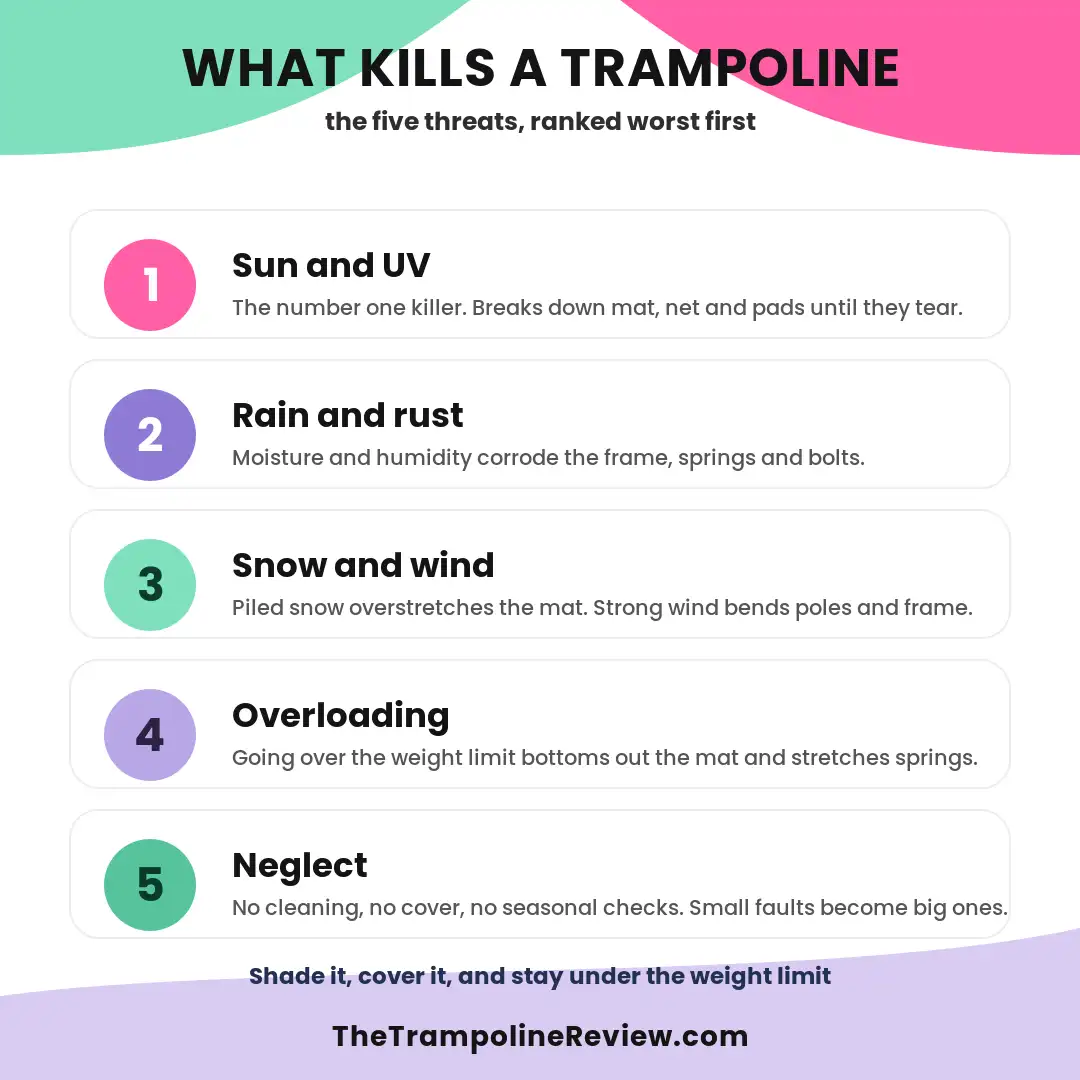
Notice the pattern. Sun and stress, not age alone, decide these numbers. Which brings us to why.
What determines how long a trampoline lasts?
Four things decide whether your trampoline sees year two or year twelve.
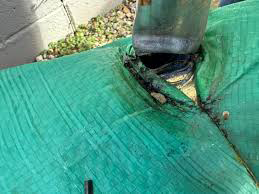
- Rusted, bent, or cracked frame. This is structural. A compromised frame means you have to replace the trampoline.
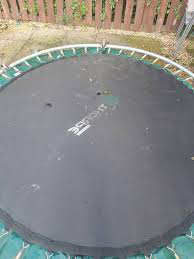
- Sagging, ripped, or holed mat. A stretched or torn mat is a fall risk and won't bounce right.
- Brittle or torn net. Once the netting goes stiff or splits, it can't stop a fall.
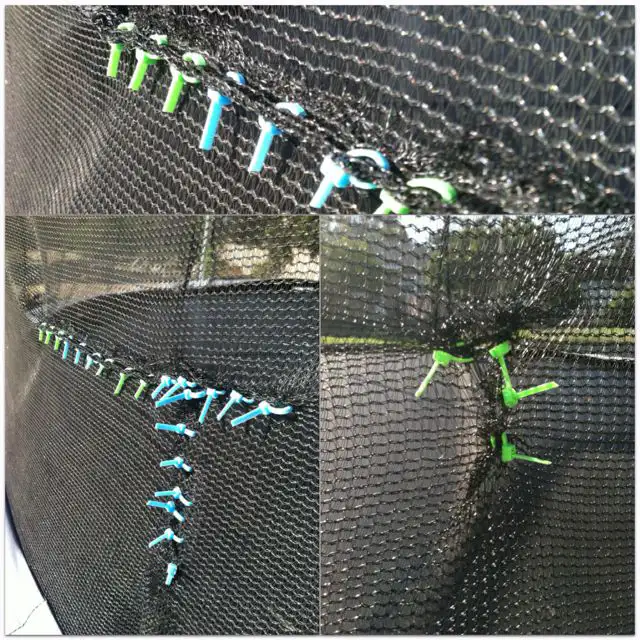
- Rusted or stretched springs. Weak springs kill the bounce and can snap loose, hurting someone.
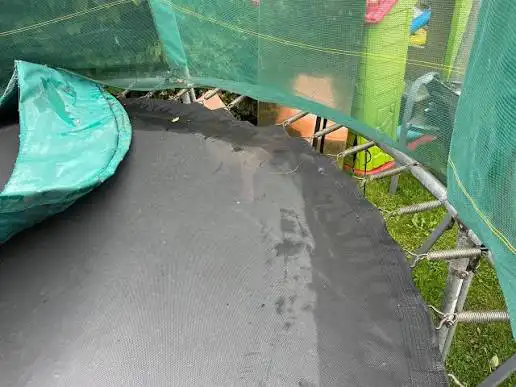
- The kids have outgrown it. A junior trampoline that's now too small for its jumpers is no longer safe for them.
Get into the habit of a quick check every season (about four times a year). A worn trampoline is not just a bounce problem, it's a safety problem. Damaged pads, nets, and springs raise the risk of injuries. So if you spot any of these signs, act on it. Our guide on how to jump on a trampoline safely covers the habits that also help it last.
Repair or replace?
Before you bin a whole trampoline over one bad part, do the quick math. Most parts are replaceable.
Usually worth repairing:
- A torn or sagging mat on a frame that's still solid
- A brittle or split net
- Rusted or stretched springs
- Faded or cracked safety pads
Time to replace the whole trampoline:
- The frame is bent, cracked, or badly rusted
- Several parts are failing at once
- It's a cheap model where new parts cost close to a new trampoline
One more thing that tips the decision: warranty. If a failing part is still covered, that repair might be free. Worth checking before you spend.
How to make your trampoline last longer
Most trampolines die years earlier than they would from neglect. Here is how to beat the average.
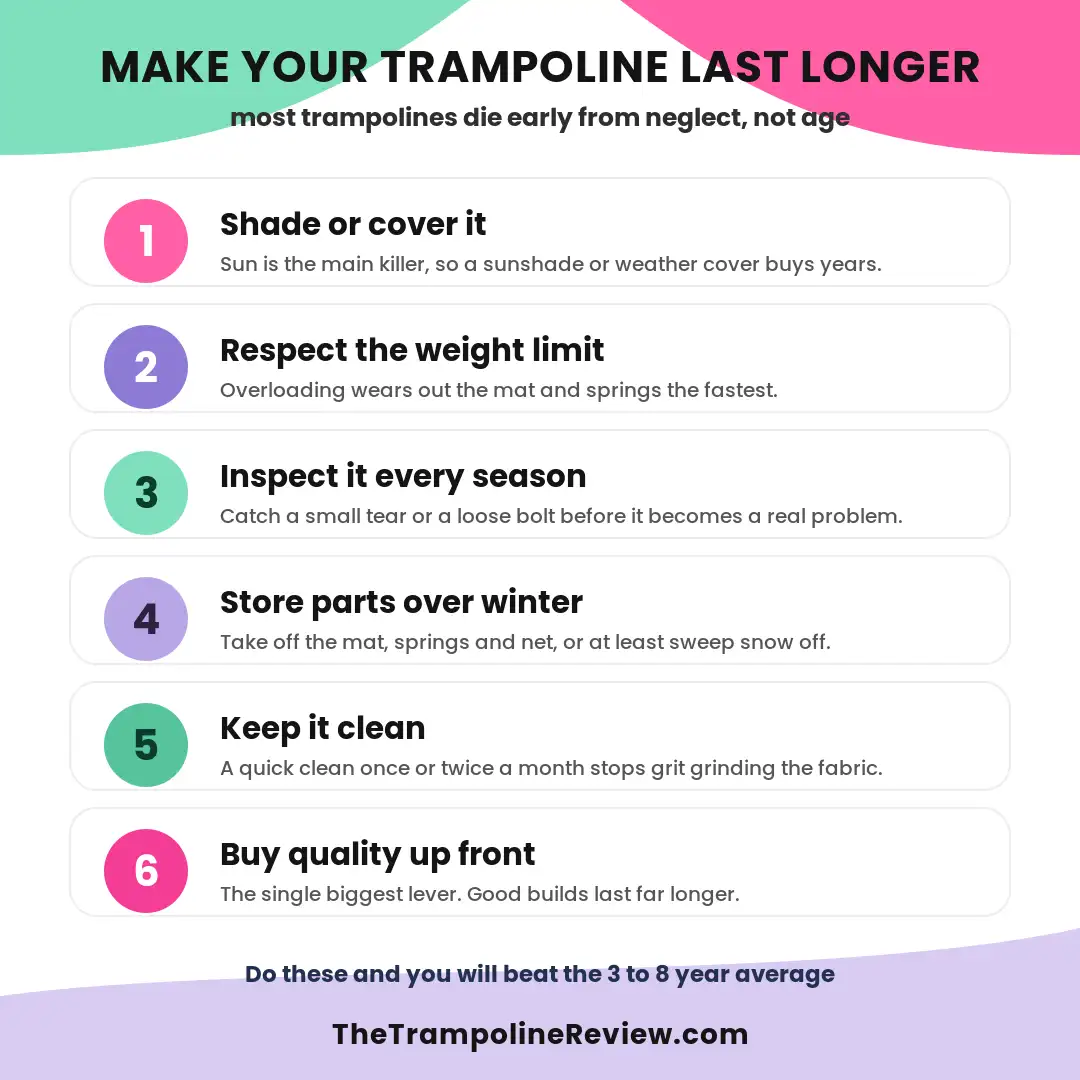
- Shade it or cover it. Since UV is the main killer, a sunshade or weather cover buys the mat and net extra years.
- Respect the weight limit. Overloading wears out the mat and springs fastest.
- Inspect it every season. Catch a small tear or a loose bolt before it becomes a real problem.
- Store parts over winter. Take off the mat, springs, and net if you're not using it in the cold months, or at least sweep snow off the mat.
- Keep it clean. A quick clean once or twice a month stops dirt and grit from grinding down the fabric.
- Buy quality up front. The single biggest lever. A well-built trampoline needs less maintenance and lasts far longer.
One aside for new owners: a fresh mat and springs can feel stiff for the first couple of weeks. That's normal break-in, not a fault. It loosens up.
Do longer warranties mean a longer-lasting trampoline?
Often, yes. The warranty is the easiest lifespan clue you'll get before you buy.
A long, all-parts warranty is the maker telling you how much they trust their own build. Some premium brands give you as many as 10 years or even a lifetime warranty on the frame. A very short warranty, or one that only covers the frame for a year, is a quiet warning that your trampoline won't last long.
It's also worth checking that a trampoline meets the US safety standards. ASTM International, the standards body, publishes ASTM F381 for trampoline components and assembly, and ASTM F2225 for the enclosure. A trampoline built to those standards should be safe.
For a trampoline that's meant to go the distance, check out the Acon Air (Gen 2.0) Round Trampoline, which uses galvanized steel inside and out. The springless Springfree Medium Oval (O77) swaps metal springs for rods and carries a 10-year, all-parts warranty.
Frequently asked questions
How long does a trampoline last on average?
Most outdoor trampolines last 3 to 8 years. A premium model that's well maintained can last 10 years or more.
What part of a trampoline wears out first?
Usually the mat and springs, because they take the most stress from jumping. The net often degrades fast as well, since UV light makes woven fabric brittle.
Does leaving a trampoline out all year shorten its life?
Yes. UV, moisture, and snow load all speed up wear. Moving the trampoline indoors or covering it for winter makes it last much longer.
How often should I replace the trampoline net?
Replace it when it goes brittle, frays, or tears. Some brands, such as Acon, suggest renewing the net roughly every 3 years as a safety habit. Check your manufacturer's guidance.
Is it worth repairing an old trampoline?
If the frame is solid and only the mat, net, or springs are worn, a repair is usually the cheaper move. If the frame is bent or rusted, or several parts are failing at once, replace the whole thing.
The bottom line
Plan for 3 to 8 years from a typical outdoor trampoline, and 10 or more if you buy a premium brand and care for it. Shield it from the sun, stay under the weight limit, and check it for issues each season. Those three habits do more for lifespan than anything else.
When a single part wears out, look for a replacement before you write off the whole thing. And when you're ready to buy a trampoline built to last, start with the warranty. It tells you almost everything.
References and further reading
- Trampoline Weight Limits Explained
- How Much Does a Trampoline Cost?
- Best Outdoor Trampolines Roundup
- What Size Trampoline Do I Need?
- How to Choose a Trampoline
- Rebounder vs. Trampoline: What Is the Difference?
- ASTM F381: Standard Safety Specification for Consumer Trampolines
- ASTM F2225: Standard Safety Specification for Consumer Trampoline Enclosures
- CPSC: Trampoline Safety
