
Trampoline Cover for Winter: Which One and Do You Need It?
Disclaimer: This website exists thanks to you, the readers. When you buy through links on my site, I may earn an affiliate commission.
Winter is hard on a trampoline, and not just where it snows. Months of rain and snow can rust the frame and rot the mat’s stitching. Freeze and thaw cycles stiffen and crack the mat.
A trampoline weather cover, or the right plan to winterize your trampoline, deals with all of it.
If you're looking for a specific type of trampoline cover for winter, below is my shortlist. After that, you'll find a guide on when and how to prepare your trampoline for winter.
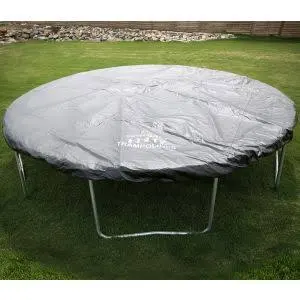
The Best Trampoline Winter (Weather) Covers
Universal covers for ANY round backyard trampoline (8 to 16 ft)
Weather cover | Description | Price |
|---|---|---|
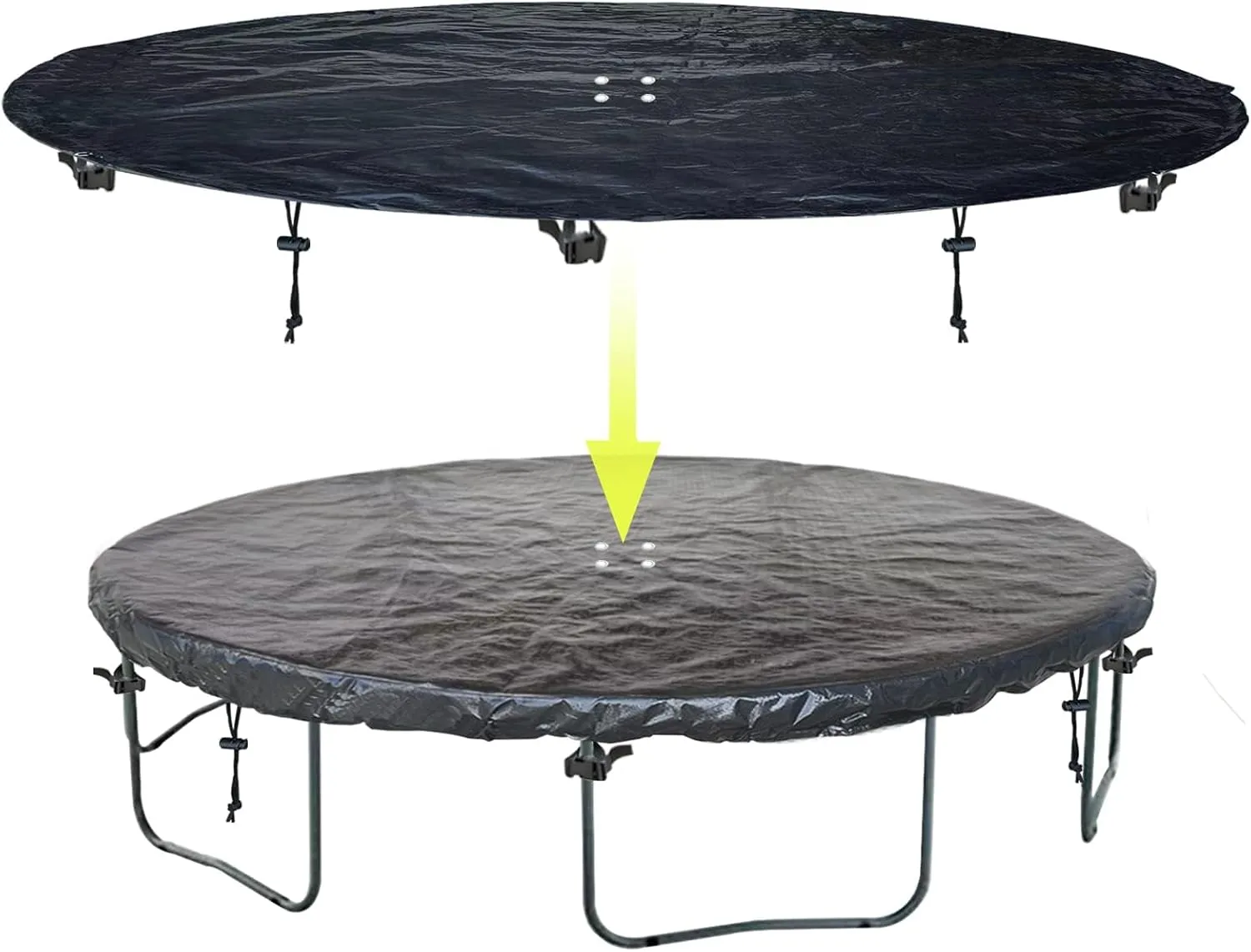 | Four drain holes so water can't pool, and an eight-point drawstring-and-buckle fix so it won't blow off. You can buy it in any standard trampoline size between 8 and 16 ft. Great value for the price. | |
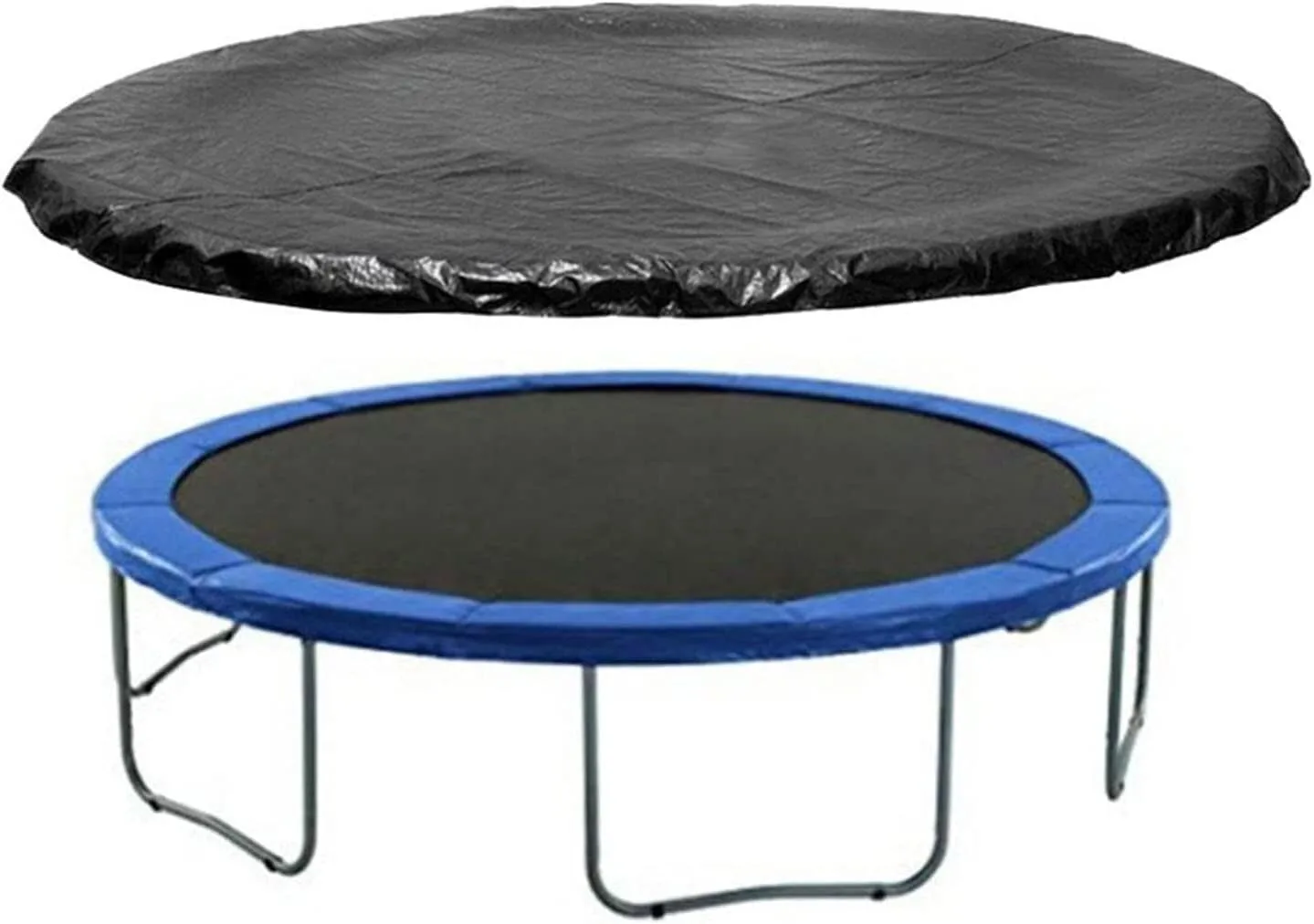 | This is also a good choice. It's made in every size from 6 to 16 ft, so you just buy your diameter and it fits. The only downside is that you don’t have the drain holes, which can come in handy. |
Kids and mini trampolines (up to 60 in)
Weather cover | Description | Price |
|---|---|---|
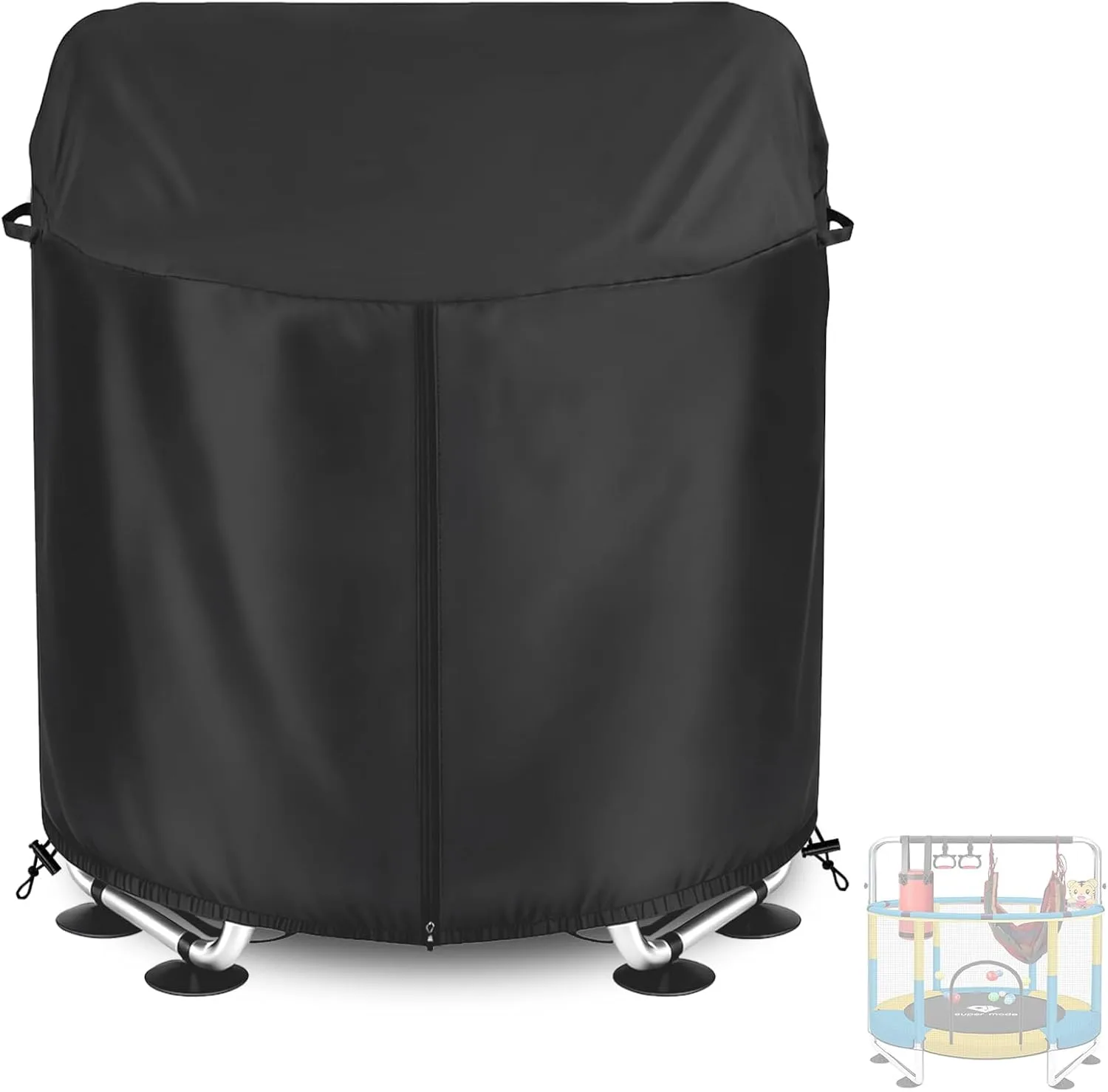 | If you've got a 55 in kids' trampoline, start here. It's one of the best small covers and the thick 600D fabric means it should last several winters, not just one. | |
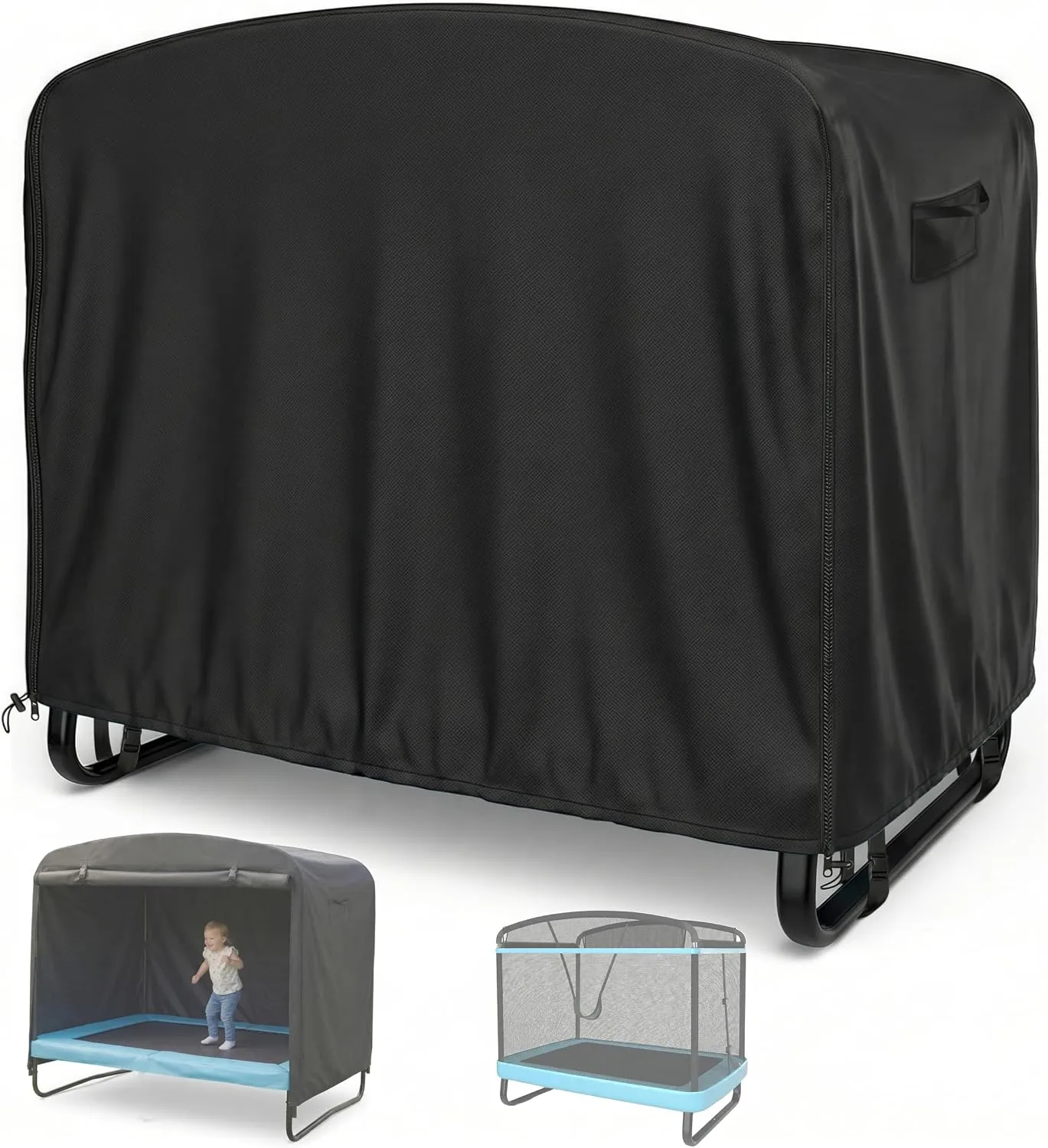 | This is the one to get if your mini trampoline is an odd size: it comes in 55”, 60”, 61”, and 6 ft. The taped waterproof seams are unusual at this price. They protect your trampoline from leaks. |
Brand trampoline weather covers
Weather cover | Description | Price |
|---|---|---|
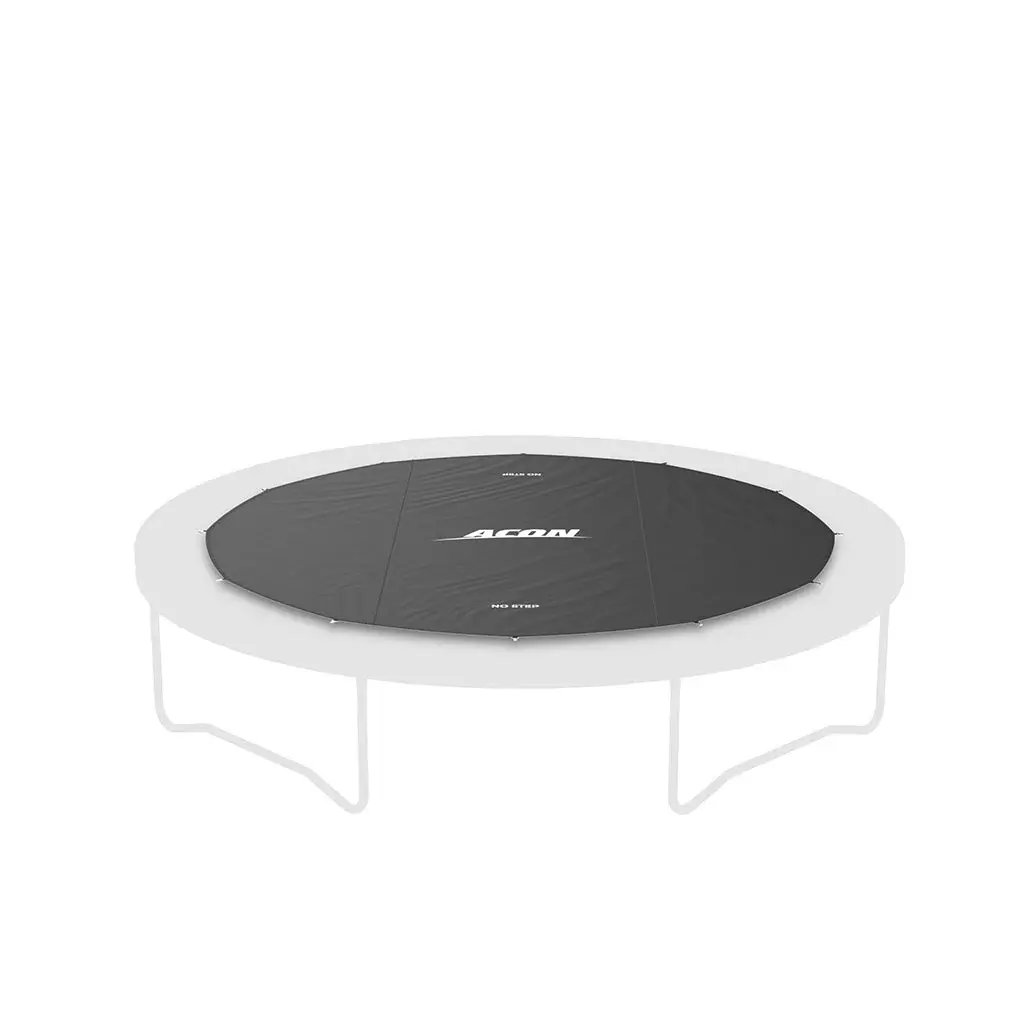 | The best-made cover here, and the one for Acon owners. UV and corrosion resistant, a proper SmartDrain centre hole, and it hooks on or off in about a minute with its own storage bag. Sizes 6 to 15 ft. | |
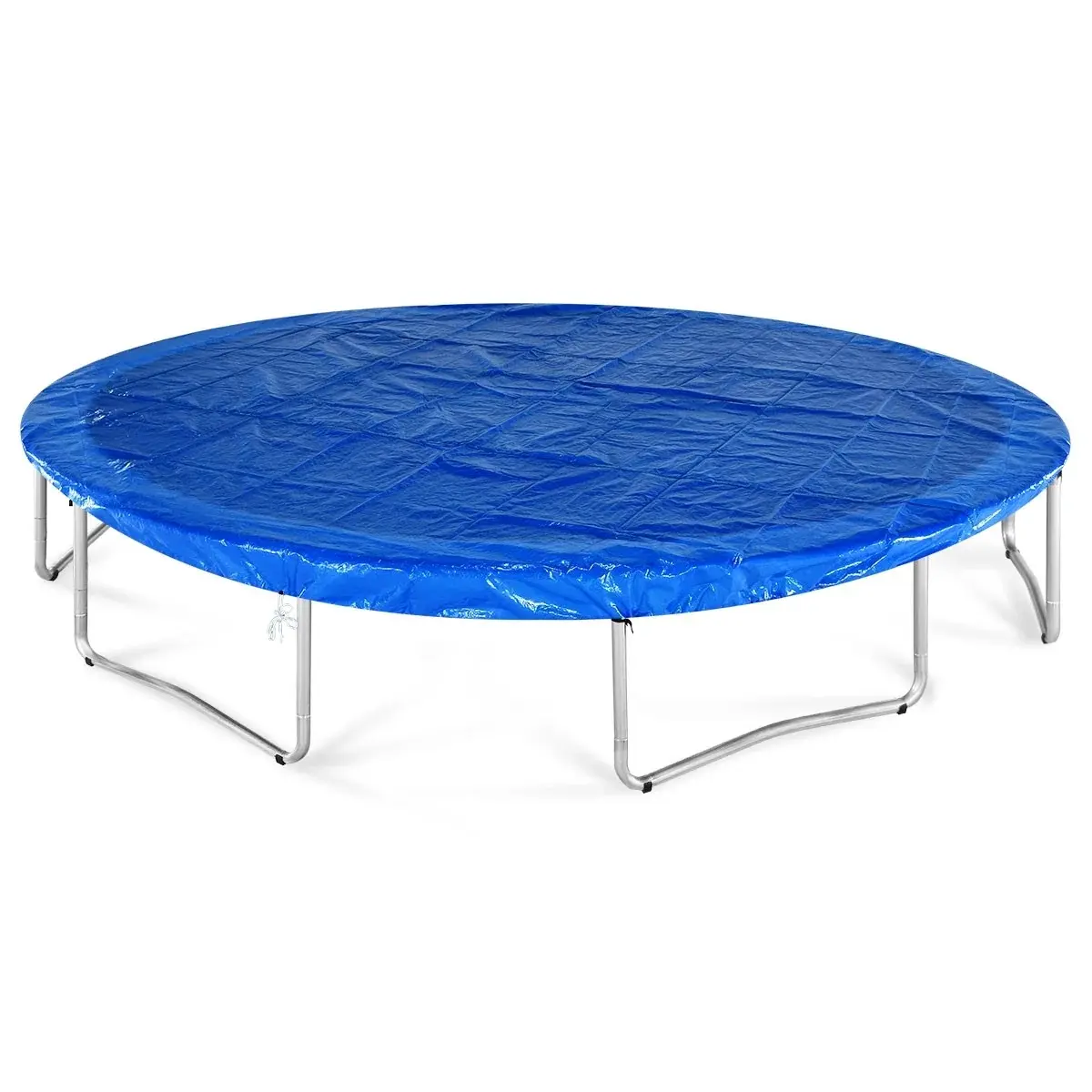 | The match for a Zupapa trampolines, in 8 to 15 ft, and it's cheap (from about $60) with Zupapa's up-to-10-year warranty behind it. A no-brainer to get if you already own a Zupapa. | |
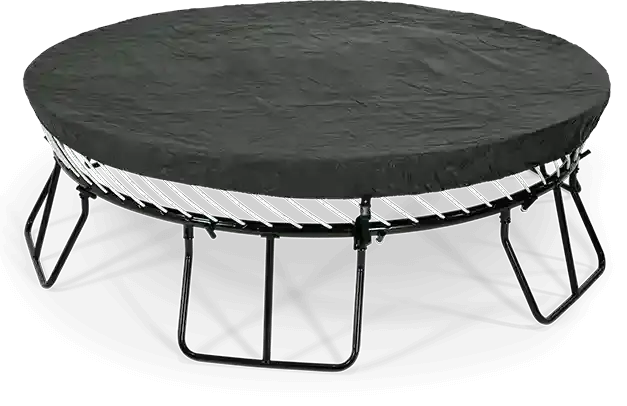 | Springfree's springless frame is an odd shape, so a generic cover won't sit right. Their own cover is sized by model and the sensible buy if you have a Springfree. It fits post-2015 (G4) models only. |
In-ground trampolines
Weather cover | Description | Price |
|---|---|---|
 | An in-ground trampoline sits in a pit that fills with leaves and water, so the cover matters more here. This one is heavy PVC, the toughest material on the list. The round model is 12 to 15 ft, and the rectangle comes in 10x14, 10x17, 12x18. |
Waterproof canopies
Weather cover | Description | Price |
|---|---|---|
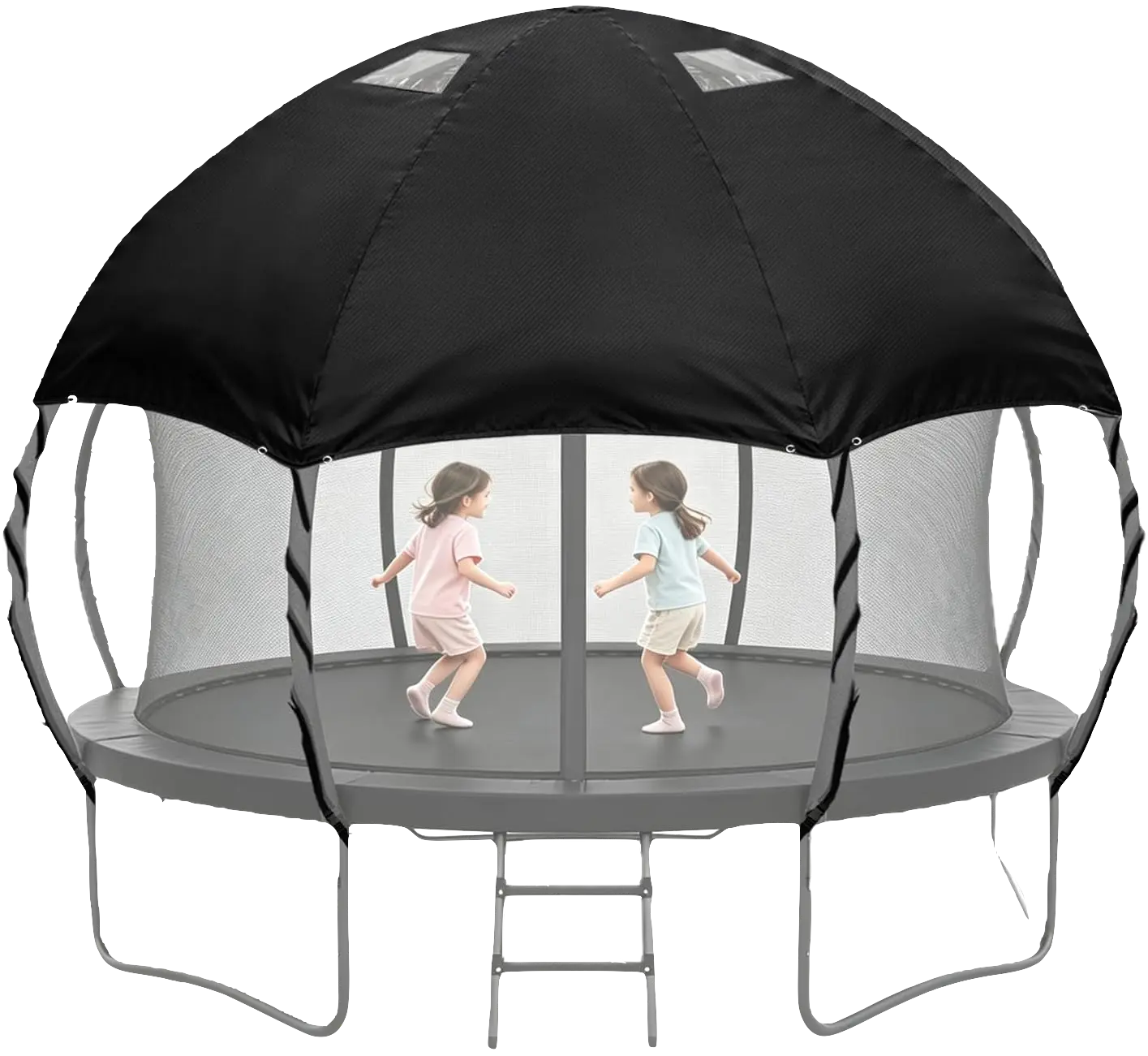 | One of the best canopies. Its dome sheds snow because of its shape. There's nothing to brush off, and the kids can still play under it on a dry day. Sizes 10 to 14 ft, as well as kids trampolines at 55” and 60”. | |
 | Durable and lightweight, this trampoline canopy comes in sizes 10 to 14 ft, and a option for smaller trampolines sized 55” to 60”. There are ventilation holes on the inside to allow airflow. |
Can you leave a trampoline out in the winter?
Yes, in most places you can. Cold on its own does almost nothing to a trampoline. What wears it out is everything cold weather brings with it, so the job is keeping water, wind, and weight off the mat and frame.
How to choose a trampoline winter cover
Fit comes first
Match the shape (round, oval, in-ground) and the size. Measure your trampoline before you buy. One catch worth knowing: Some brands offer their own covers. For example, Acon, Zupapa, and Springfree. If you own another brand, buy a generic cover sized to your diameter.
Fabric decides how long it lasts
- 420D Oxford is light and cheap, fine for mild winters, like the Simingxi mini cover.
- 600D Oxford is thicker and more tear and UV resistant. It’s the sweet spot for most backyard covers, like the TiantianBao cover.
- PVC is the heaviest, most waterproof, and most rugged. It’s also the priciest, like the Avyna in-ground cover.
- PE is the cheaper tarp-style material, waterproof but stiffer and quicker to tear at the fixings, like the MDybf cover. A plain builder's tarp is the bottom of this: cheapest, worst fit, pools water.
The "D" stands for “denier”, the thickness of the threads, so higher is tougher.
Drainage is crucial
On a flat cover, look for a center drain hole. This prevents rain and melted snow from collecting in the middle. A canopy doesn't need drainage because the slope sheds water itself.
Fixings keep it on in a storm
A cover held on by a stretchy hem alone can balloon and lift off in high wind. You want one that also straps, buckles, or ties down to the frame legs or the mat's spring rings.
What winter actually does to a trampoline
Water and damp
This one gets everybody, snow or no snow. Rain, fog, and melted snow soak into the mat and work into the spring holes and frame joints, and over a wet winter that rusts the frame from the inside and rots the stitching on the mat and pads. Freeze-thaw makes it worse: water that soaks in and then freezes expands, stiffening the fabric and cracking the coating. A cover that sheds water is mostly fighting this.
Wind
A trampoline is a big, light sail. One winter storm can lift an unanchored one into a fence or a car. This is a year-round risk that peaks in winter.
Snow
Snow is far heavier than it looks, and a wide mat catches a lot of it. One inch of water over a square foot weighs 5.2 pounds, per the National Weather Service, and about 10 inches of average snow melts down to that inch of water, with wet snow heavier still. These are estimates and wet snow roughly doubles them:
Trampoline size | Footprint | 6 in of snow | 12 in of snow | 12 in of wet snow |
|---|---|---|---|---|
10 ft | about 79 sq ft | about 245 lbs | about 490 lbs | about 985 lbs |
12 ft | about 113 sq ft | about 355 lbs | about 705 lbs | about 1,410 lbs |
14 ft | about 154 sq ft | about 480 lbs | about 960 lbs | about 1,920 lbs |
15 ft | about 177 sq ft | about 550 lbs | about 1,105 lbs | about 2,210 lbs |
A foot of wet snow on a 14 ft trampoline is roughly 1,900 pounds, near a short ton. If that sounds mad, picture a foot of wet snow on your car.
Why the weight matters
A trampoline is built for a quick, moving load, not a steady one. Hundreds of pounds sitting there for weeks stretch the mat and springs out of shape and can bow the frame. Neither of these will recover, so the bounce goes soft and the trampoline wears out years early.
Cover it, put a canopy on it, or take it down?
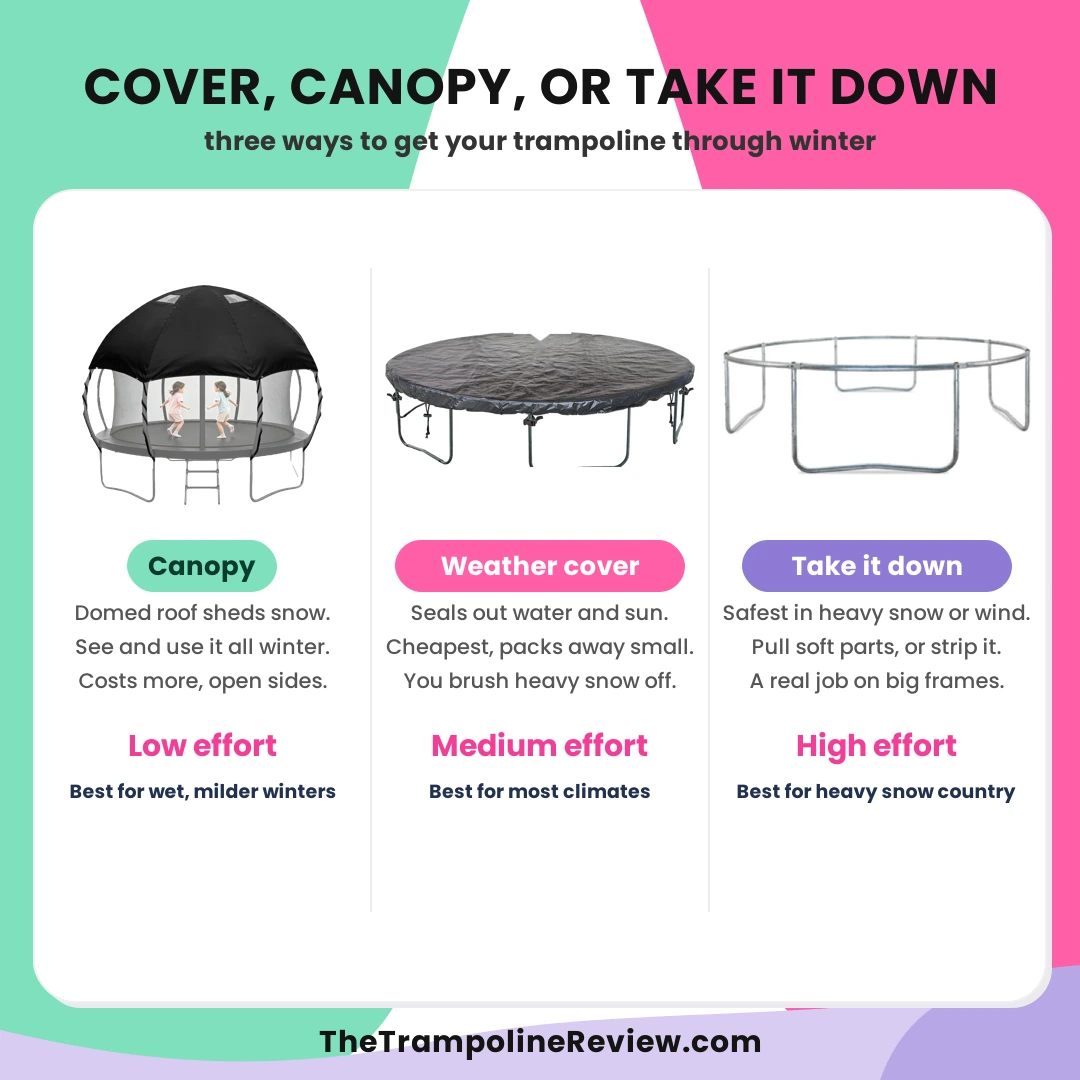
You can do three things to keep your trampoline safe in winter. Pick by your weather and how much effort you want to spend.
Flat weather cover
A flat weather cover lies over the mat and springs and seals out water, snow, leaves and sun. It is the right answer for most people in most climates. It packs away small and costs the least. In snow you still brush heavy falls off it, because it doesn't hold the weight up for you. Get one with drainage to avoid water pooling in the middle.
Waterproof canopy
A waterproof canopy is a domed roof on poles. The slope sheds rain and snow instead of letting it sit, the vents stop damp building up, and you can keep using the trampoline. It costs more, needs assembly, and its open sides let some weather in. Choose it for a wet, milder winter where you might still use the trampoline.
Take it down
Taking it down is the safest route in heavy-snow country. It ranges from pulling the net and pads indoors to a full strip, which is a real job (see below).
Your winter | What to do |
|---|---|
Wet and mild, little snow | Leave it up with a cover or canopy, and anchor it |
Mixed, occasional storms | Cover it, anchor it, clear snow promptly, and take the net and pads indoors to spare them |
Heavy snow or fierce wind | Strip it: springs and mat off, everything indoors, frame apart. |
How to protect your trampoline from winter wind
Anchor the frame with an anchor kit or wind stakes before the ground freezes, for example this trampoline anchor kit . Take the safety net and poles off for the season too because the net can act like a sail. In a genuinely nasty forecast, taking the trampoline down beats trusting the anchors.
If you're taking it down: What to actually remove
Remove the soft parts
Take the safety net and the spring pads off and store them dry. Both come off in minutes without touching the springs, and they're the parts that fade and rot fastest, so this is most of the benefit for little effort. The mat and springs stay on the covered frame.
Take it apart
This is worth it only in heavy snow or ice, or if you're putting the trampoline away. Unhook all the springs with a spring tool, working evenly around the circle. Bag and label the springs and hardware and store the mat somewhere dry.
At that point the frame is bare, so if you're short of space you may as well take it apart too. On a 14 or 15 ft trampoline this is a couple of hours each way, which is exactly why it's a last resort. Manufacturers say the same: the mat can stay on in mild winters and only needs to come off when heavy snow is likely.
Getting it ready again in spring
Put back whatever you took off, then give it a once-over before anyone bounces:
- Inspect the springs for rust or any that have stretched or popped off
- Look at the mat for tears, thin spots or worn stitching
- Examine the frame for rust, bends or cracks
- Check the anchors and fasten them if needed.
Frequently asked questions
Do I need a cover if it doesn't snow where I live?
Yes. Rain, damp and freeze-thaw rust the frame and rot the mat over a wet winter even with no snow at all, so a cover is worth it in any wet climate.
How much snow is too much on a trampoline?
Less than you'd think. Six inches on a 14 ft trampoline is around 480 pounds, and a foot of wet snow is close to 1,900. Clear it before it builds up.
Flat cover or canopy?
A flat cover seals the trampoline away for the season and costs less. A canopy sheds snow because of its shape and lets you keep using it, but has open sides that can let rain and snow in.
Should I take my trampoline down for winter?
Mild or wet winters, leave it up with a cover and just pull the net and pads indoors. Heavy snow or fierce wind, strip the mat and springs or take it apart. You rarely need to touch the springs otherwise.
Can you jump on a trampoline in the snow?
No. Use it in the cold only if the mat is clear and dry, never with snow or ice on it. See our guide on how to jump on a trampoline.
The bottom line
Winter wears a trampoline through water, wind and snow. If you’re getting wet, mild winters, you can leave it up with a cover or canopy and keep the water off. If you’re in snow country, aim to clear snow fast and keep the soft parts indoors. Anchor your trampoline either way. Do that and it'll be ready for your family to bounce again in spring.
References and further reading
- Snow Loads, National Weather Service
- What Are Snow Ratios?, National Weather Service
- Trampoline Safety in Childhood and Adolescence, American Academy of Pediatrics
- The Best Outdoor Trampolines
- How Long Does a Trampoline Last?
- How Much Weight Can a Trampoline Hold?
- What Size Trampoline Do I Need?
- How Much Does a Trampoline Cost?
